
24 September 2026
On Tuesday, Kāpiti CALM questioned Council about its continued use of the extreme-end SSP5-8.5 (RCP8.5) climate scenario in coastal hazard planning.
The meeting was prompted by recent advice from Climate Change Minister Simon Watts.
But the outcome?
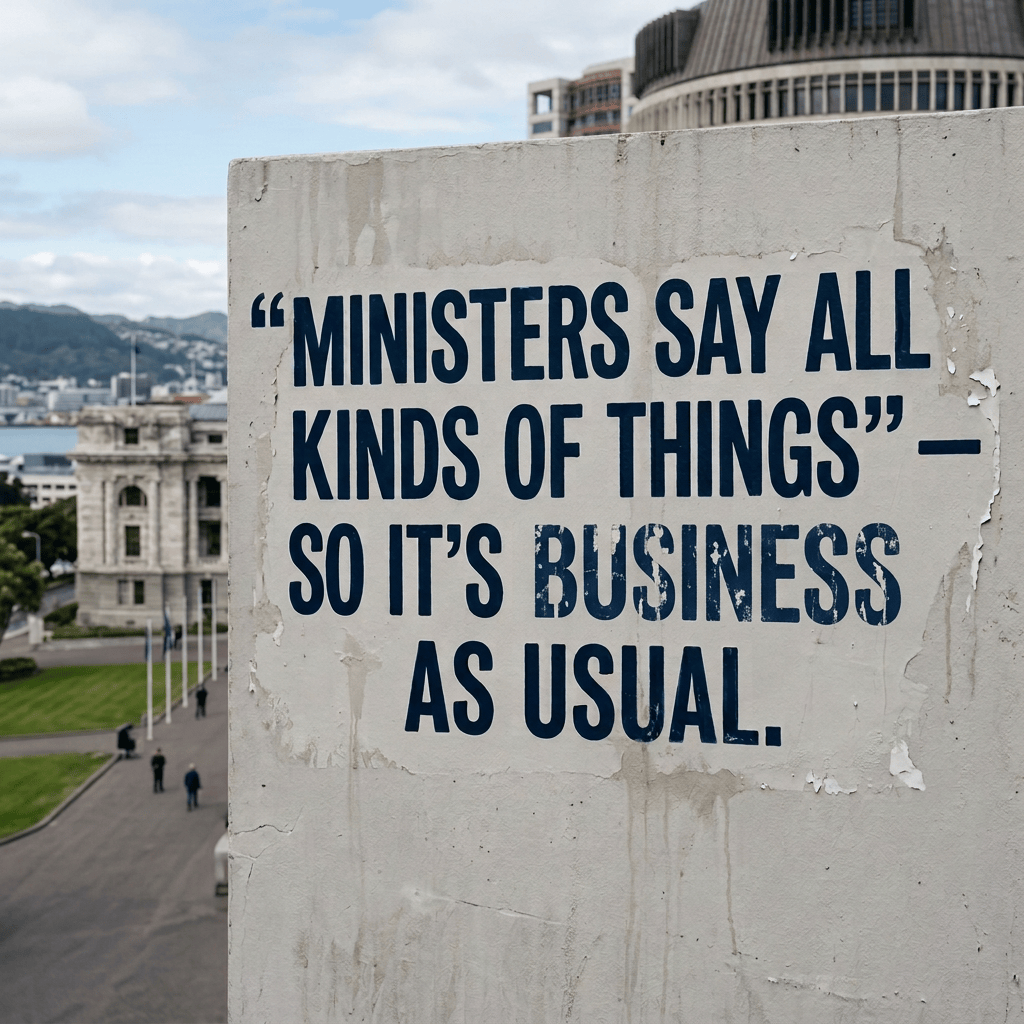
Business as usual.
Council intends to continue using the extreme-end modelling.
And when we questioned the relevance of the Minister’s advice, one Council staff member responded:
“Ministers say all kinds of things.”
That raises a much bigger question.
Why does Council rely on Government guidance when it supports its position — but dismiss ministerial advice when it doesn’t? Guidance is just that – we really have to follow legal statutes which says likely affects must be used in planning.
We put five straightforward questions to Council, including:
🔹 What climate scenario is actually being used as the primary planning assumption?
🔹 Is SSP5-8.5/RCP8.5 driving coastal hazard maps and planning controls?
🔹 What is the scientific and statutory justification for using an extreme-end scenario?
🔹 What are the financial consequences for affected property owners and ratepayers?
🔹 How will Council demonstrate that the resulting controls are proportionate to the risk?
We’ve also asked how much Council has spent defending its climate and sea-level-rise modelling — and what could have been achieved with that money instead.
This isn’t about ignoring climate risk.
It’s about whether less-likely, extreme-end assumptions should drive potentially far-reaching decisions about people’s homes, property values and rates — without clear justification.
Council now has some questions to answer.
Kapiti CALM will keep asking them.
We’ll report back when Council responds.


Leave a comment