
Happy New Year –
What’s on the horizon for 2025 ?
Happy 2025 everyone and we hope you all had an enjoyable Christmas/New Year break.
As we gear up for 2025, a year which is looking very much like our coastal adaptation concerns and hopes will be coming to a climax, or maybe more appropriately a climatic end, we want to give a brief update on what’s in store over the next few months.
Some time in April we will see Council’s 3rd attempt on how they will proceed with the CAP recommendations – we don’t know which way they are going to swing on this so it’s really important to keep the pressure on all the councillors. Please see our email dated 20th December for more information on the Council meeting held 5th December when the CAP report was last discussed.
Once we have a date for their meeting we will be asking all our supporters to turn up and be counted. It is imperative we stop this because if accepted, KCDC will have the ability to put personal hazards on 1000’s of LIM’s which is likely to affect insurance ability and reduce the value of your home.
Preceding this, some time in March we will be extending an invitation to you all to join us for a casual gathering to thank you for your support.
We are currently working on some eye-catching billboards to continue to raise awareness in the Kapiti region.
Please join our supporters database to keep up with updates and invitations – drop us a line at kapiticalm@proton.me
UPDATE on our submission to the Parliamentary Inquiry into Climate Adaptation

On Tuesday 16th July Tanya spoke on behalf of CALM to the Finance & Expenditure Committee on our submission to the Inquiry into Climate Adaptation, and it kinda felt like we were entering the hornet’s nest!
Facing 8-10 panelists on zoom we had 10 minutes, so we kept it short so there was time for questions – there were NO QUESTIONS asked (hmmm kind of of reminded us of our appearances at Council). Don’t ask them questions – get rid of them as soon as we can!
Alot of effort goes into preparing for these things and it takes courage to swim against the tide. We give up our time, sacrifice work and family to have a say. We are up against paid bureaucrats, corporations, invested interest companies and groups, and “experts” whose careers and reputations drive their reasonings.
We know that they don’t want to engage with us but we WILL continue to speak up and we will not stop, and we will not be leaving quietly.
Below is a copy of our oral presentation – to watch the Parliamentary video the link is below – Tanya speaks around the 29 minute mark
https://vimeo.com/showcase/10758103/video/976068693
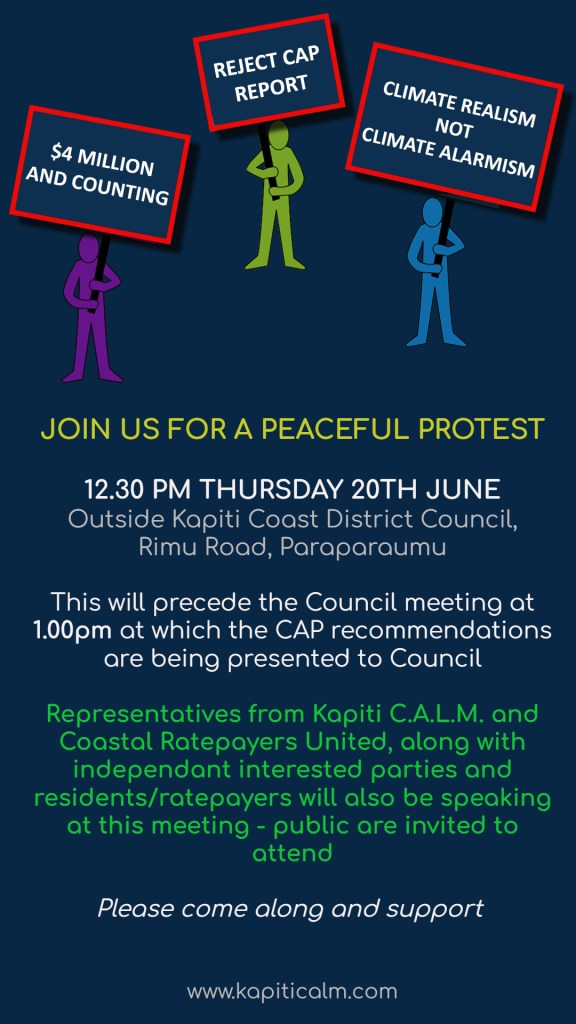
UPDATE on the peaceful protest and council meeting on 20th June, 2024
There was a great turnout of around 70-80 residents/ratepayers that came to stand outside the council to show their concerns. It was a light atmosphere, even given the importance of the implications of the report being presented to Council, and we were met with many toots from passers-by in support.
During public speaking time there were 10 members of the public who spoke, covering the wide-ranging concerns of groups and individuals.
We are currently working through where to from here and will keep you all updated. In the meantime you can read the media reports from the day on our Latest News / Media page, and another interview with our spokespersons Tanya and Carrie will be uploaded shortly.
Urgent Community Meeting #2 – Update
14th May 2024, Southward Theatre, Otaihanga
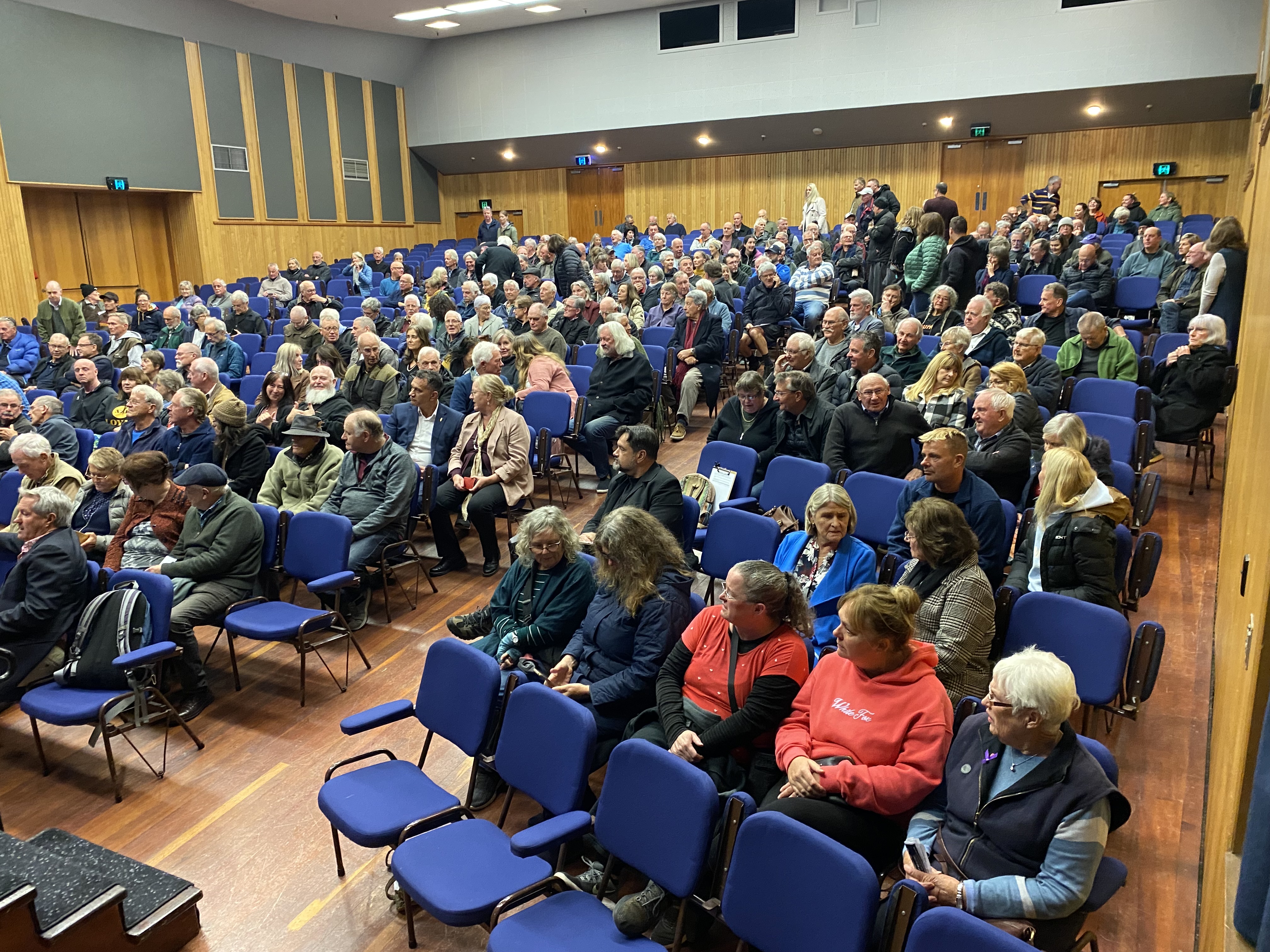
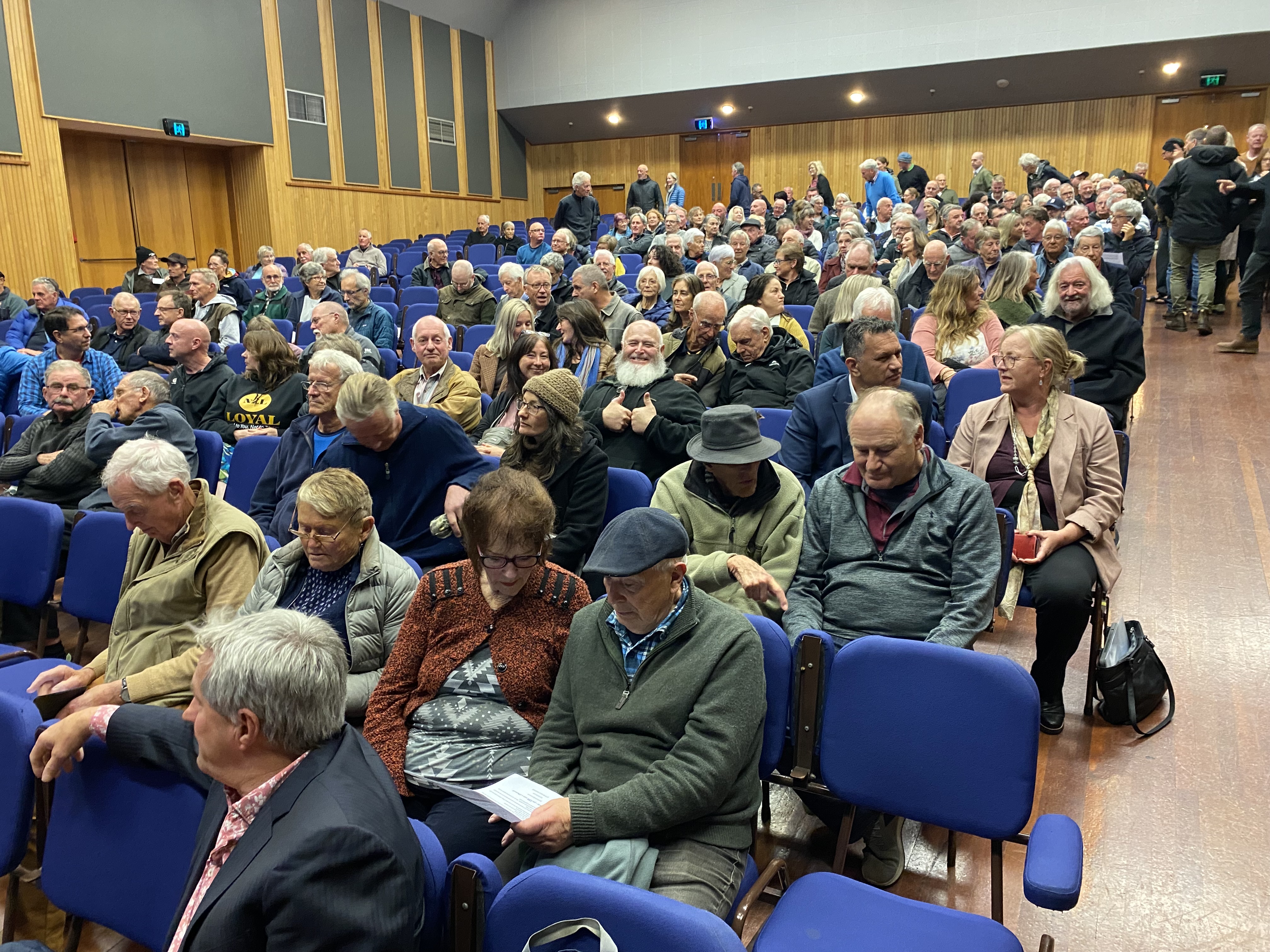
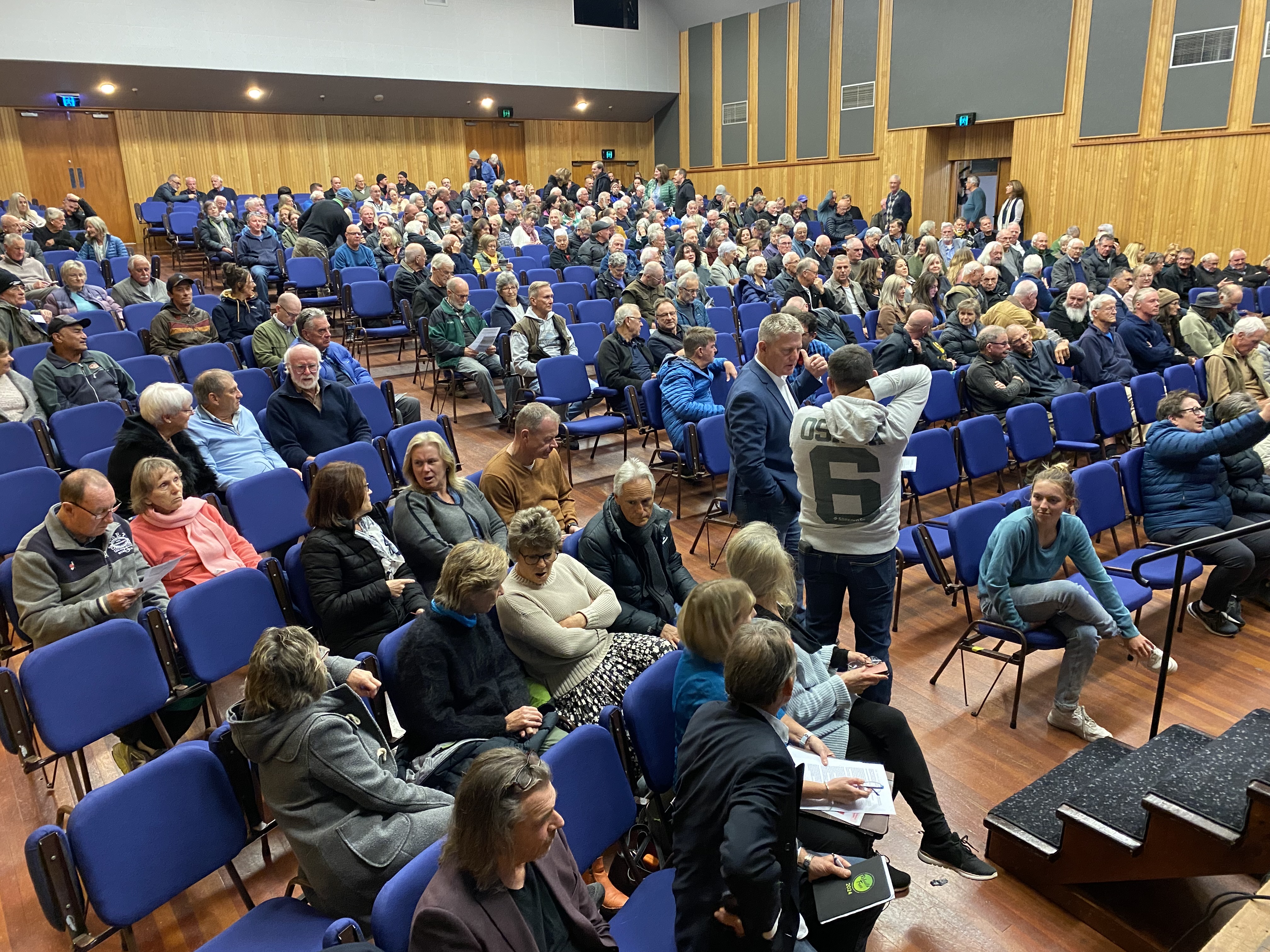
OH WHAT A NIGHT !!! we tripled attendance from our previous meeting, with over 450 concerned community members in attendance on Tuesday night. We want to thank everyone who participated and helped put this important community meeting together.
We even had our Mayor attend who had the opportunity to address the crowd. We appreciate this was probably not an easy thing to do given the mood of the audience but an important step towards having open dialogue. The Chief Executive was also present along with some councillors. Although the Mayor couldn’t stay for all the presenters we hope what she did hear had some impact. (audio of Mayor Janet Holborow’s address and Q&A is linked below)
There is alot to unpack from the meeting but in the meantime we are popping up here the presentations from our spokesperson Tanya, Sean Rush’s science/data based presentation and the full document referred to Ian Harrison’s talk on his review of the Coastal Advisory Panel’s Analysis.
We would also like to thank our MC for the night Dean Harris and Paul Brennan for his inspiring address to the community. Also a big thanks to Southward Museum for the use of the theatre.
The audio for Tanya’s presentation below can be heard here
Audio of Mayor’s address can be heard here
The audio for Sean’s presentation below can be heard here
The audio for Ian Harrison’s presentation on his analysis paper below can be heard here
Paekakariki Community Board address, 30th April 2024
Tuesday night saw us at another Community Board Meeting to present our statement as CAP was on the agenda to give their update to the Board (more on that at a later date)
Below is the statement that was read out and presented which was met with silence from the Board – not one question was asked!
Otaki Community Board address, 9th April 2024
Last Tuesday night saw us at yet another Community Board meeting. There was another good turnout from the public, and speakers included our spokesperson Tanya, Sean Rush and a member of the community (Martin).
As we had been accused of doing the rounds with the same old story, and some were getting tiresome of it, we decided to change things up a bit. So we sought input from some of our supporters and our statement (below), included some of those responses.
We would like to report back that the reception we received in general from the Community Board had improved on our last visit, and there were some questions put our way. Unfortunately we cannot say the same of the Chair, but regardless of this we will continue to advocate for a calming of the extreme modelling and the impact that this will have on the community at large.
Waikanae Community Board address & CAP update 2nd April 2024

BRICKBATS AND BOUQUETS FOR THE WAIKANAE COMMUNITY BOARD MEETING THIS WEEK
Another interesting night was had on our Community Board circuit, with our attendance at the Waikanae Community Board meeting held at the Te Horo hall, to present our concerns (statement below).
We extend a BOUQUET to all those who attended, particularly those who spoke on behalf of the community. The notable turnout showcased a strong interest – we are not sure if they have ever seen so many interested community members!
However, a BRICKBAT must be directed to Chairperson Richard Mansell, who repeatedly emphasised the meeting’s nature as a Board session, where attendees were merely observers without the privilege of speaking or participating (unless you had pre-registered for public speaking time which is limited to 3 minutes per person). His concerns about potential disruptions from the public seemed to overshadow the essence of community engagement and dialogue and we believe this attitude warrants reconsideration given our homes and our futures are being discussed. Perhaps a revision of standing orders to foster a more inclusive and democratic environment is needed.
Additionally, it’s worth noting that our spokesperson, Tanya, was cautioned about the importance of accuracy in our statements, while the same standard wasn’t explicitly communicated to other presenters.
Despite these challenges, we extend a BOUQUET to the few Board members who showed support engaging in thoughtful dialogue and expressing thanks for our contributions.
Disappointingly, the Mayor, though in attendance, missed an opportunity to address significant concerns regarding the CAP process, particularly those raised by CRU and CALM. As usual, CAP’s presentation left us feeling disillusioned, underscoring the costly and seemingly fruitless nature of their endeavours as key components such as the Economic Analysis and threshold triggers remain incomplete.
Looking ahead it’s another action-packed week next week !!
Next on the Community Board circuit is the Otaki Community Board, next TUESDAY 9th APRIL, 7pm, Otaki Memorial Hall, next to Library Otaki, Main Street, Ōtaki
Don’t forget we also have an opportunity to engage direct with some CAP representatives at a presentation/Q&A session event being organised by the Paraparaumu Community Board, on WEDNESDAY 10th APRIL (time/venue to be confirmed)
DON’T BE FOOLED
The recent Council statement withdrawing the extreme model RCP 8.5H+ is a red herring. The reality is that their continued use of SSP8.5 results in the same level of extreme outcomes. We explain here why we are saying this…………
It’s great news that CAP/Council are dropping the RCP8.5H+, and we will take that as a win from all the pushback you have engaged in—you can make a difference, so please keep it up!
However, it is not the big win that the Takutai update would have you believe….
CAP continues to advocate for the use of extreme science, and the difference between RCP8.5H+ and what they are continuing to use (SSP/RCP8.5) is minimal—they have only dropped the extreme version H+ of the still extreme and implausible sea level rise factor 8.5.
From CALM’s research, a more realistic and plausible SSP/RCP 4.5 should be used, along with other relevant factors (such as sea walls and rocks, removal of Bruun Rule for rocky shores, and land accretion and uplift from earthquakes). In addition, historical data for the Kapiti coast must be used. This alone would show minimal sea rise compared to extreme futuristic modelling.
CAP has stated on the public record (Paraparaumu Community Board meeting March 2024) that historical climate data for the region is not a big focus, instead relying on climate change modelling to predict the future somehow while also admitting that the future is not predictable! Since CAP’s ‘brief’ is limited to coastal erosion & inundation for developing adaptation zones, the exclusion of other important factors, such as uplift from earthquakes, makes no sense. CAP has also stated, “There’s more predictability of sea rise than earthquake uplift”. We the ratepayers of this obscenely expensive exercise, need to hold CAP to account for such statements, show us the science behind such statements!
There also appears to be a narrative forming that somehow “the insurance companies will look favourably on Kapiti properties” if adaptation zones, including thresholds, signals & triggers, are included in planning. Again, we need to be asking where the evidence for such statements comes from.
See article https://www.thepost.co.nz/nz-news/350216471/capital-crisis-insurance-now-risky-business-wellington
We must stop this hypothetical madness from harming us in real time now and insist on CALM realistic broad outcomes.
Thank you to all those turning up to your local community board meetings, CAP/KCDC meetings, and, of course, our recent CALM open community meeting. Showing up, speaking out, writing to the council, and talking to neighbours are vital strategies for the community to hold the council and CAP to account.
Paraparaumu Community Board address & CAP Update 26.3.24
We attended the Paraparaumu Community Board meeting this week, where during the public speaking session we addressed the Board, and it was encouraging to see others taking advantage of this opportunity as well. Other speakers included Salima on behalf of Coastal Ratepayers United (CRU) and Sean Rush with regards to the science/data being used.
It was great to witness some of the Board members actively engaging with the speakers and posing important questions to the CAP representatives. We were particularly pleased to learn that the Paraparaumu Community Board is following the lead of the Raumati Community Board by arranging a CAP/community engagement meeting on 10th APRIL (exact time and venue to be determined). This meeting will adopt the same format as the one in Raumati, with CAP presenting followed by an open Q&A session with the public. This is precisely what we have been advocating for from Council for quite some time, only to be met with denial. Pop this date in your diary – its going to be another important opportunity to engage.
We would like to commend the two Community Boards for their responsiveness to the voices of those they represent and urge the other Community Boards to do the same (Waikanae, Otaki and Paekakariki).
Below is the statement we presented to the Board.
COMMUNITY MEETING UPDATE AND VIDEO
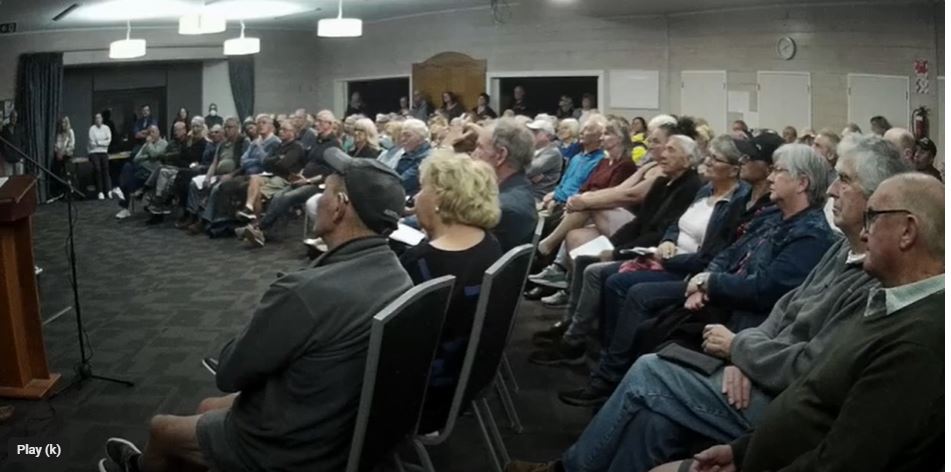
Thank you to everyone who attended our community meeting on Tuesday night (19th March 2024). It was standing room only with over 150 concerned residents, including 3 councillors – Nigel Wilson, Martin Halliday and Glen Cooper who also participated in the Q&A session.
Together we are strong and you CAN make a difference. Please send our flyer (posted below) and a link to the video of the meeting far and wide via email or social media https://www.youtube.com/watch?v=NOFwFoTdjz4 or Rumble: https://rumble.com/v4kmjth-kapiti-c.a.l.m.-meeting-19-march-2024.html
From the meeting we have identified 5 major areas of concern:
- CIRCULAR RESPONSIBILITY – the current framework as set up by KCDC/CAP (including CAP’s Technical Advisory Group) ensures a lack of accountability. Some CAP representatives have stated in public meetings they are not responsible for Council accepting their recommendations, even if it is based on extreme modelling. They also refuse to acknowledge their process will affect insurances in real time.
- EXTREME MODELLING used by CAP within the Jacob’s Report and the SeaRise Project (the latter has been rejected through the peer review process) which creates extensive Coastal Adaption Area (CAA) maps and hazard zones.
- PRE-DETERMINED OUTCOMES with the placement of a reference to the Jacob’s Report on all Kapiti LIM’s.
- HYPOTHETICAL FUTURE HAZARD SCENARIOS can lead to significant community harm NOW.
- UNDEMOCRATIC PROCESS – CALM and members of the community have been asking direct questions from the appropriate Council staff and are being fobbed off to the Official Information Process (OIA) and there is no personal accountability.
We would also like to thank Waikanae Watch for an excellent summary of the evening which you can view here https://waikanaewatch.org/2024/03/21/the-calm-alarmist-law-madness-meeting-held-in-raumati-19-march-2024/
CALL TO ACTION – please pass on this handout that was presented at our Community Meeting last night (more to come on that!)
Available here in .pdf format for printing and sharing (please email us if a .jpg file is required for social media sharing)
CAP Updates and Q&A Sessions for Raumati area, 13/14 March 2024
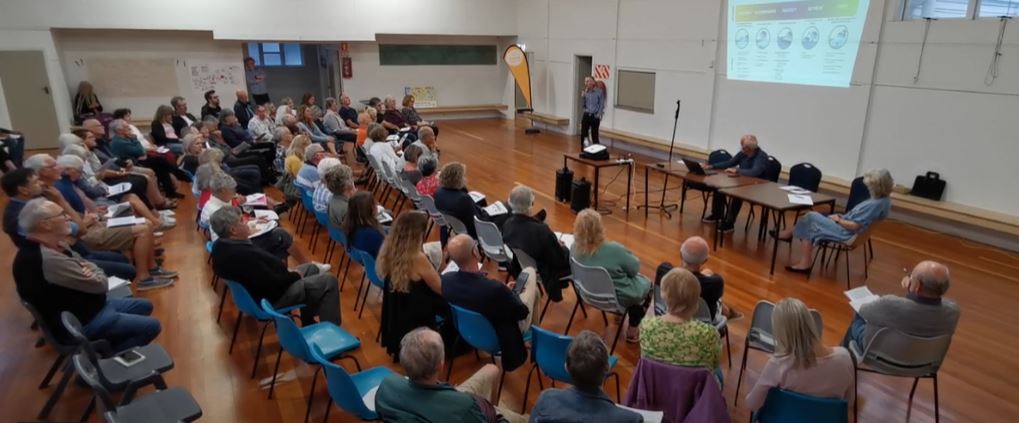
This week, we had the opportunity to participate in two community meetings facilitated by the Raumati Community Board. During these sessions, four members of the Coastal Advisory Panel (CAP) team provided an update on their ongoing work for the Raumati areas.
The meetings were engaging and informal, allowing community members to pose questions and engage in direct dialogue with the CAP representatives following their presentation. We congratulate the Raumati Community Board for fostering such meaningful community engagement, which we genuinely appreciate.
It was heartening to see a significant turnout of community members eager to engage and seek clarification on various matters. While the CAP team endeavoured to address queries to the best of their ability, it was evident that some questions remained unanswered.
The primary focus of the presentation was to introduce and discuss the draft pathways. However, it became apparent that there is still considerable uncertainty among the public regarding this topic, and others surrounding the whole process which lead to numerous questions and concerns.
One aspect that raised some unease was the initial presentation slide titled “Our climate is changing and the sea is rising,” juxtaposed with statements from CAP members, such as “we don’t know what sea level rise will be, we have no idea” ; “there are so many unknowns”; “if we believe the science” and “things may change”. Despite this uncertainty, extreme modelling techniques continue to be utilised in determining future pathways.
Some questions were raised regarding the impact on insurance, particularly due to the current inclusion of a reference to the Jacob’s Report in our LIMs. While CAP perceives this as a matter primarily concerning the Council, we hold a contrary view. We contend that CAP’s recommendations particularly if they entail the use of the extreme RCP 8.5H+ modelling from the Jacob’s Report, will directly influence our LIMs, subsequently affecting insurance.
Furthermore, while the presentation highlighted potential challenges such as erosion, storm damage, and flooding, there was a notable absence of imagery depicting instances of accretion or land-rise. This one-sided portrayal warrants careful consideration and reflection on its implications.
We look forward to receiving copies of the Raumati presentations which we can then share with the community and encourage everyone to review them independently. It’s crucial for each of us to contemplate the implications of the CAP’s initiatives and engage in constructive dialogue moving forward.
We were informed that the CAP members will also be presenting at the upcoming Paraparaumu Community Board meeting on March 26th. We highly encourage everyone to attend and participate in this important discussion.
Below are links to the video recordings taken at both Raumati Meetings (Credit: Karl Webber)
https://youtu.be/pjoLFCCAz5s (Raumati south of Wharemauku stream)
https://youtu.be/AkqnGTTK6ps (Raumati north of Wharemauku stream)
ADDENDUM TO ABOVE:
At both meetings CAP repeatedly emphasised they’re not accountable for council decisions. If the council adopts their recommendations, which we view as unfair and predetermined, then it’s the council, not CAP, responsible for any hazards on our LIMS. CAP insists on using implausible factors like SSP/RCP8.5H+, affecting most Kapiti ratepayers.
The council might shift responsibility, citing adherence to CAP’s recommendations. Insurance companies may argue negligence for not considering hazards on LIMs, absolving themselves of cost increases or property devaluation.
Overall, Kapiti ratepayers have spent over $3M in costs for a process that no one is taking responsibility for, which potentially will lead to significant losses per household. The beneficiaries are scientists, bureaucrats, and insurance companies.
It’s imperative to unite and send a strong message that we hold CAP and councillors personally accountable.
DEMOCRACY IN ACTION – YEAH, RIGHT !

Last night (13.2.24) we attended the Paekakariki Community Board meeting for two reasons. One was to present a statement from Kapiti C.A.L.M., reaffirming our position on the implausible science in the Jacob’s report, used by the Coastal Advisory Panel (CAP). We felt this was an opportune time as it was advertised that some CAP members would be present to provide an update on their work on the Paekakariki Coastline.
Upon registering for the “3-minute public speaking time,” our spokesperson, Tanya, read our statement, which included 2 questions for Ward Councillor Sophie Handford. The Chair denied Tanya the opportunity to ask questions directly, stating it was not the correct procedure for public speaking time. Fortunately, a member of the public, who are not usually allowed to speak, inquired about the questions, allowing Tanya to read them out.
The meeting format then permits Community Board members to ask questions of the speaker. Christian Judge took this opportunity to launch an extreme rant, accusing C.A.L.M. of climate denialism without posing any questions to our speaker. This unexpected attack from a Community Board member left many attendees astonished, highlighting a lack of openness to discussion or interaction with the community unless in agreement.
The irony around democracy surfaced when the Chair emphasised the strict rules during the meeting, restricting public speaking unless prompted. He also did not interject when his own Board Member behaved badly by loudly and forcefully stating his beliefs while trying to discredit C.A.L.M and its concerns.
Our second reason for attendance was to hear the CAP update. Despite a brief pre-meeting chat with a CAP member, the presentation was short, and all three members left immediately after, disappointing our expectation for further discussion.
Following this, the Chair delivered a lengthy statement on meeting protocol, emphasising the passive role of the public, undermining the democratic principles they claim to uphold and silencing anyone who tried to interject. CALM expects respectful, intelligent dialogue which is why our members and other community members left the meeting at this point.
While aware of the “official” formats, our past positive interactions with Community Board and CAP members at Raumati meetings suggest there should be room for accommodating public participation. It is essential for the representatives to acknowledge and consider the perspectives of all citizens, irrespective of agreement or ideological association.
Change is needed to allow public expression without censorship. Representatives are there to serve and represent the entire community, not just those aligned with their beliefs or political affiliations.
Note: C.A.L.M.s statement and CAP’s Paekakariki update documents can be found on our References/Links page https://kapiticalm.com/references-links/
December Update & Christmas Wishes
As the year draws to a close, CALM wanted to take the opportunity to do a quick recap on 2023, the year that was.
Inspired by the events of the Raumati Community Workshop (held by the Coastal Advisory Panel) on 29th July, a core group quickly formed, each assigned specific tasks required to get the job done. We were then officially launched on 23rd September, and have quickly established a supporter base which continues to grow by the week.
One of our first objectives was to lay a formal complaint about the conduct of the CAP Chair during THAT meeting, which was an affront to free speech and the ability of the community to voice their views without prejudice. This resulted in RNZ and RCR interviews, the latter with Paul Brennan on the Breakfast Show
Thousands of flyers have been painstakingly designed and distributed to the residents of Kapiti to raise awareness of CALM’s advocacy work. A website and Facebook page followed, along with a PowerPoint presentation.
We have been tireless in our goal of calling out flawed scientific data and flawed community engagement used in the Takutai Kapiti/CAP project. We refuse to accept the SSP5-8.5 and RCP8.5H+ extreme modelling which even the IPCC (Intergovernmental Panel for Climate Change) has admitted is implausible. CALM will continue to campaign for real data + real science + real answers to give calm outcomes and hold back the tsunami of climate alarmism which will see our properties devalue and hazards noted on LIMs. It will also add to more mental anguish for our community when we are already dealing with rising living costs.
We have been involved with speaking engagements at various organizations including the Coastal Ratepayers United AGM, VFF and the Raumati South Residents’ Association. In the process, we are creating a large network of contacts and organizations who are able to assist in this ultimate fight for our homes and way-of-life.
We have constantly put the Chief Executive, Mayor, Councillors and associated Kapiti Coast District Council staff on notice to hold them accountable for any decisions they make, and shine a spotlight on any undemocratic practices.
In early November, CALM hired a hall and held its own community meeting ahead of CAP’s Community Workshop the following night, to educate the Paekakariki residents on what was going on. We did a PowerPoint Presentation and were fortunate to have leading climate scientist, Sean Rush (with extensive local knowledge) speak on the flawed science being used.
CALM then protested at the CAP Workshop held at the same venue the following evening, when only sixty Paekakariki residents were permitted to attend the Workshop by RSVP.
We were humbled to have been interviewed by award-winning filmmaker, Alistair Harding, for an upcoming documentary.
And lastly, the past few weeks have been spent attending local community board meetings in Raumati, Paraparaumu and Otaki. These have been an interesting glimpse into which boards have been receptive to hearing about CALM – and those which couldn’t wait to show us the door (Otaki). During these meetings we have read out statements on CALM, our concerns and the solutions we wish to see, and we have ensured they have been tabled in the minutes.
SO, WHERE TO FROM HERE?
Early next year we will attend the remaining community board meetings and advocate for the people of Otaki who are having the Northern Adaptation Area Draft Pathway Recommendations go before Council in May 2024. This is now becoming a national issue with Napier also being affected in the same way.
We would also like to point out the tireless work Coastal Ratepayers United (CRU) has been carrying out for the past ten years by the Chair, Salima Padamsey and her committee, including the many experts who are hard at work in the background. Recently, CRU managed to raise almost $40,000 in order to secure a Coastal Hazard Risk Assessment from Waikato University. Please consider joining CRU, as they are another valuable advocacy asset to the community www.cru.org.nz . Salima’s recent interview is well worth a listen.
We will continue to campaign for what is right and just, and gather as many like-minded souls as we can to join us on this journey. Your contribution, however small, is invaluable and we appreciate all you have done thus far.
The only thing left to say now is to have a wonderful Christmas and a year ahead filled with joy, prosperity and good health.
Rest well, travel safely, and we will reconvene after the holidays.
Best wishes,
The CALM team
ENGAGING WITH OUR ELECTED WARD COUNCILLORS AND COMMUNITY BOARDS
November, 2023

In recent weeks, C.A.L.M. has actively participated in three Community Board meetings (Raumati, Paraparaumu, and Otaki) to articulate our concerns regarding the flawed scientific modelling and the inadequate process employed by the Coastal Advisory Panel in identifying Adaptation Zones.
This has been an interesting but also frustrating process. We have now realised that the current structure of Community Board Meetings provides limited space for meaningful community engagement on crucial matters. While there is an allocated time for “public speaking,” it is constrained to a brief 3 minutes, with an optional provision for questions exclusively from the Board. Regrettably, there exists no other official avenue for community members present to interact with the Board or other presenters.
It’s worth noting however the approach taken by the Raumati Community Board, which actively welcomed direct community engagement. Notably, they facilitated the attendance of three Coastal Advisory Panel members at their meeting, fostering an environment conducive to respectful, robust, and open discussions—qualities inherent in a democratic society.
Additionally, some members of the Paraparaumu Community Board expressed interest in posing questions to our speaker. Unfortunately, this interest was absent from the Otaki Community Board meeting we attended and we came away feeling quite bemused.
At the Otaki meeting during public speaking time we heard from someone asking for funding for a kite project – the Board were quite engrossed with this and the presenter was able to speak for quite some time. The Board also was full of questions and support – don’t get us wrong, it was nice to see such enthusiasm from the Board.
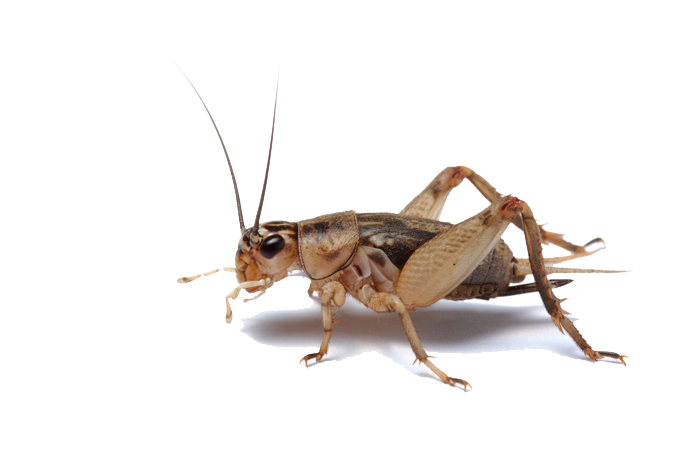
But then, our spokesperson was given a max of 3 minutes to present our concerns around the Coastal Adaptation Area process. The timer was set and it went off just prior the end of our presentation. The Chair was keen for her to finish there, although she did manage to get the last paragraph out. Then it was the Board’s turn to ask any questions – crickets! nada, zilch, not a dickey-bird from the Board – NOT ONE SINGLE QUESTION!
We submitted our document and sought support from the three Community Boards for our concerns. Unfortunately, to date we have not received any responses.
So, our question to the Community Boards and Ward Councillors is, how can we advance open dialogue with our elected representatives? The existing format of Community Board meetings is notably restrictive and controlling. We believe that the community, not just on this specific issue but on other concerns as well, deserves a more inclusive and responsive forum for engagement.
Will it continue to be crickets or will they engage?
Kapiti C.A.L.M. Community Presentation, Paekakariki,
Monday 6 November, 2023
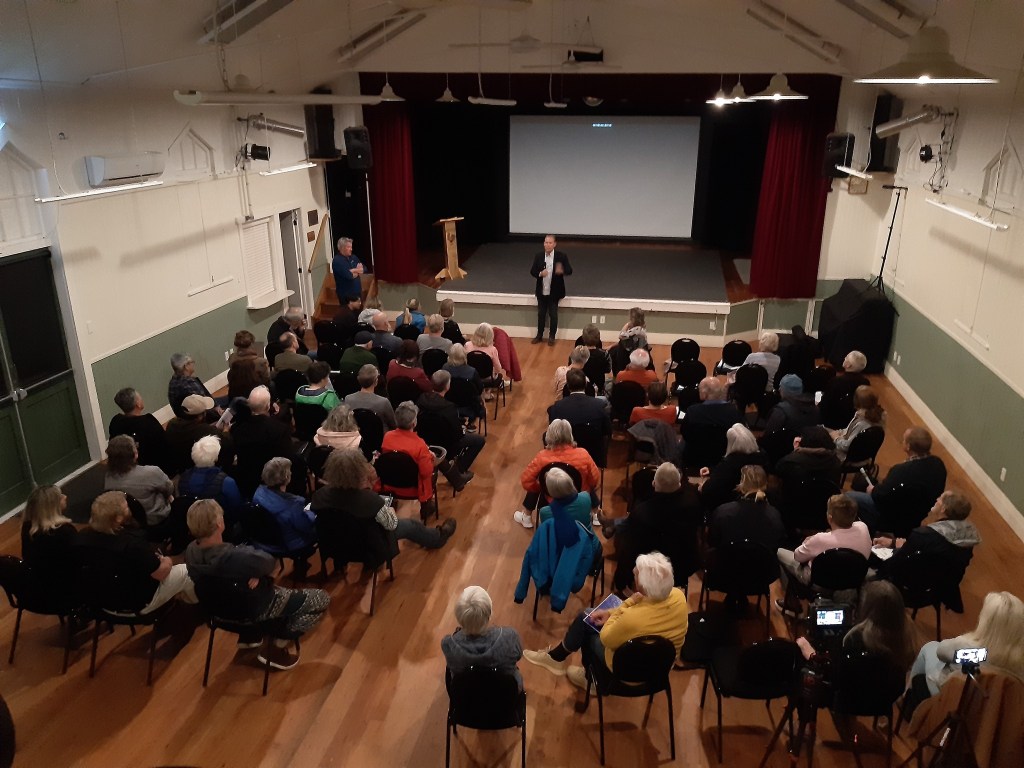
We had a great turnout on Monday night to our community presentation.
A big thank you to Tanya and Sean Rush for the presentations, Dean our MC for the night and for all those involved in putting this together.
A huge thank you to those who came along with an open mind and a willingness to listen. There were some great questions raised and we received alot of positive feedback.
Recording of evening can be found here CALM Paekakariki 6 Nov 2023
Takutai Kapiti/CAP Community Workshop, Paekakariki,
Tuesday 7th November, 2023
CAP held the last of its community workshops in Paekakariki last week. It followed mostly the same format as previous workshops for the other Adaptation Areas although this one was limited in numbers and by pre-registration only.
The workshop was heavy on Council members and staff, including the Mayor and the Chief Executive and light on CAP members.
Feedback we received from some attendees:
“Although CAP members were present, they were not introduced, except Jim Bolger, who opened and closed the meeting. The CAP members remained silent during the whole evening but mingled with some at the end. There was a strong council presence.
The agenda was tightly run as this was a community values workshop with very little said about CAP and the progress of their work to date. We were shown the coastal map, a few graphs and asked to consult CAP posters on the walls. For any questions, we were asked to write them on green stickies and that answers to these questions would be emailed to us later on.
Reading the mood in the room, there was a feeling of disbelief, when the meeting was deemed finished, as most of us expected some elaboration on CAP work once the work shop was completed. There was very little Q & A time, however:
– They told us there were no scientific expert present in the room to answer our questions– They heard us when we told them that we are not concerned about the sea level rise, but more concerned about the ongoing maintenance and completion of the Paekakariki sea wall, which is crumbling, in parts, as we speak.
– They heard us when we said that this was probably one of the most important meetings to take place on the Kapiti Coast and to not restrict public attendance and not have the proposed online engagement meetings, going forward. The message was very clear that we wish to have further face to face meetings to discuss this further. The CO, Darren Edwards, whose name I just checked, as he was not introduced either, confirmed that the council would review the format of the next Paekakariki meeting.
– They heard us when we said that some of us were not aware of CAP until a flyer was dropped at our door from a residents group.”
(Paekakariki resident)
“What a disgrace the KCDC Paekakariki meeting was – not at all a ‘ consultation’!..
Has anyone seen answers to the questions – that people put on the board at the hall? – KCDC promised to answer them.
I left feeling very angry – the whole KCDC exercise was very manipulative.
Shame on the mayor”
(Paekakariki resident)
Recording of evening can be found here Takutai Kapiti Paekakariki Adaptation Area Community Work, 7 Nov 2023
 KAPITI C.A.L.M.